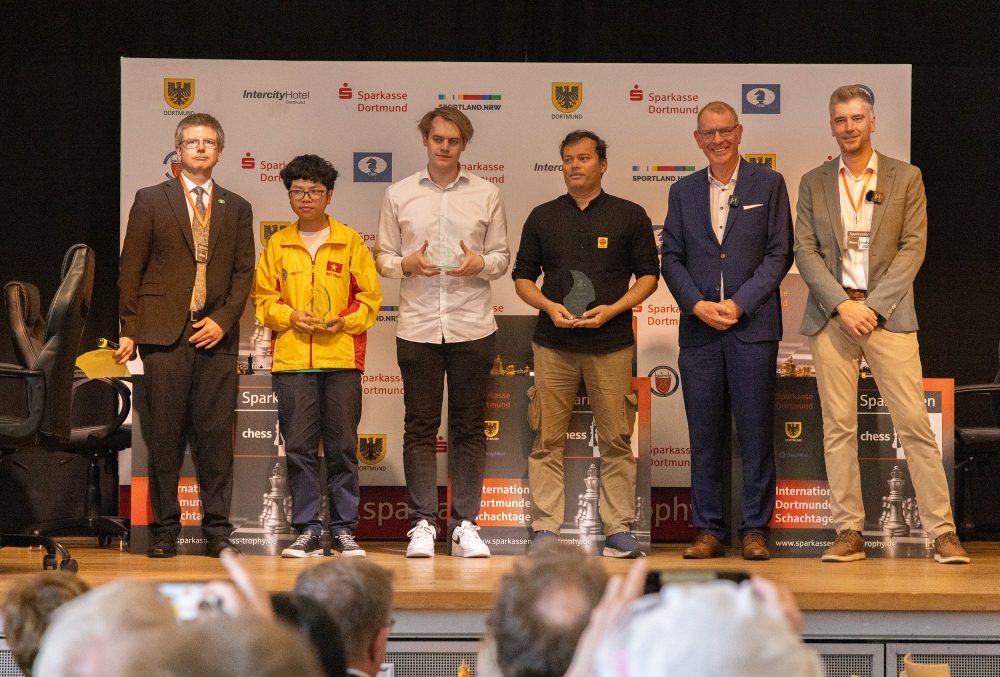
As in other sports, biological males have an advantage over women
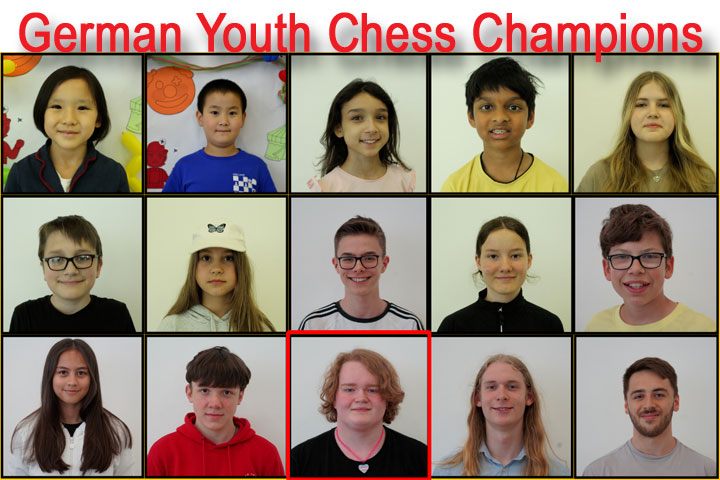
The battle of the sexes, or, to be more precise, the battle over sex, has broken out in the oldest of all war games, chess. In Germany, Nora Heidemann, 17, identifying and officially categorised as female but born a boy, won the national girls’ under-18 tournament. The German Chess Youth organisation acclaimed Heidemann’s result: “Congratulations on this great performance!” The head of the German commission for women’s chess, Nadja Jussupow, was less thrilled. As the Times reported last week, she claimed that more trans women were entering women’s chess tournaments since the introduction last year of Germany’s Self-Determination Act: “They merely declared themselves to be women.”
Jussupow also claimed to have spoken to many female players who said they would stop competing if it continued. She meant, presumably, in women-only events, since the great majority of tournaments are “open” ones, in which men and women compete together. They are invariably won by men. Which is, in a way, her point: “The difference is particularly clear at the top: the men’s national team, for example, plays two classes higher than the women’s team.”
Put more clearly: China’s Hou Yifan, far and away the world’s strongest female chess player (so much so that she relinquished the women’s world championship she first won at the age of 16, as she had nothing left to prove in that context), is ranked 96th in the world, on the Elo rating system, behind 95 men.
When the world chess governing body, FIDE, said in December 2023 it would not permit trans women to play in women’s events under its auspices — basically, the women’s world championship — pending a review of the matter, it declared, in response to critics: “Of course men and women are equally intellectually capable. However, in chess as a sport other factors like physical endurance may play a role.”
This was widely ridiculed, notably by the Labour MP Angela Eagle, a joint winner of the 1976 British girls’ under-18 chess championship: “There is no physical advantage in chess unless you believe that men are inherently more able to play than women. I spent my chess career being told women’s brains were smaller than men’s and we shouldn’t even be playing.” This may well have been the unpleasant ambience when Eagle was competing. But the idea of male physical endurance being of no relevance to this mind sport is itself regarded as ignorant by those women who have competed at the highest level. One of them, Alexandra Kosteniuk, wrote, in exasperation: “It’s almost impossible to explain to non-chess-players how physically demanding the game is, and how hard, physically and psychologically, it is to compete in world championship-level competition.”
When, 11 years ago, I played a game against Hou (and was ground down remorselessly in 45 moves) I asked her why women were outperformed so widely by men at the highest level. “There is a physical side. In chess sometimes you play for seven to eight hours.” She added that “based on history, I don’t see any chance” of a woman becoming the world’s strongest player. So, no real-world version of the Netflix drama The Queen’s Gambit.
In fact, at 14, Hou was the world’s highest-ranked player of her age, of either sex. The same had been true of the astonishing Judit Polgar, who became a grandmaster at the age of 15, beating the record of the late Bobby Fischer. Polgar, the only woman ever to have entered the world’s top 10 — in 1996 — told me it was only social and cultural factors that stood in the way of women becoming as good as the men at the highest level.
Yet a decline in the ranking of females versus males in chess does seem to occur with the onset of puberty and, on the male side of the divide, the effects of testosterone. Those effects are enormous in physical sport, which is why some national sporting bodies’ refusal to recognise this, allowing trans women to compete in female weightlifting competitions, swimming or cycling, for example, aroused justifiable public bewilderment — and equally justifiable anger on the part of female competitors who saw their chances blighted by a demented ideology that denied the reality of male biological advantage.
But chess — really? If so, it may be analogous, in some way, to a phenomenon in the distribution of IQ: although the male and female averages are the same, males are overrepresented at the very bottom and the very top of the range. To put it crudely, we men provide more idiots and more geniuses. But chess skill is not a pure measure of intelligence: I have met enough chess grandmasters to know that. And I have a small personal example: my stepfather, Sir Alfred Ayer, then Wykeham professor of logic at New College, Oxford, who at the precocious age of 25 produced the seminal book Language, Truth and Logic, was an avid chess-player. But, as a dopey teenager, I would beat him every time we played.
The idea that the complete absence of women at the very top of the world chess rankings is a cultural rather than biological phenomenon has frequently been justified by the point that among those registered as players, and at a recreational level, men greatly outnumber women. Therefore, it is said, this is a participation effect — akin to the fact that China will produce many more Olympic gold medallists than Iceland, because their vastly higher number of athletes enhances the probability of having more with extreme talent. So, get more women playing chess, and, over time, they will match men at the very top.
That would be wonderful to see, but, alas, the argument was demolished by Carole Hooven, an evolutionary biologist and the author of T: The Story of Testosterone. She pointed out: “Like chess, Scrabble uses a version of the Elo rating system. But unlike in the chess world, women dominate the recreational ranks of Scrabble, accounting for about 85 per cent of all recreational players. Even at the competitive level, women generally outnumber men ... so if the participation rate hypothesis were correct in this context, then women should be dominating the elite Scrabble ranks. But they’re not. Instead, men dominate Scrabble’s upper tiers, as they do in chess. And the same goes for bridge.”
Hooven’s conclusion is that men are more disposed to the intense and passionate obsessiveness, shutting out all external activities and interests, required to become the world’s best over the confines of the 64 squares. Or, as the late Dutch grandmaster Jan Hein Donner put it: “What is going on in their heads is narcissistic self-gratification with a minimum of objective reality, a wordless snuffling and scrabbling in a bottomless pit.”
If women are, for biological reasons, less able to lead such a life, the rest follows.
About the author
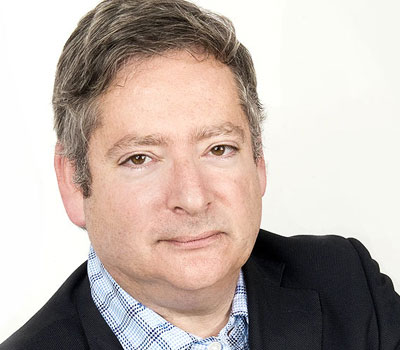 Dominic Ralph Campden Lawson (born December 17, 1956) Dominic Lawson, a longstanding columnist with the Sunday Times, and previously editor of the Spectator and Sunday Telegraph.
In 2014, when the English Chess Federation was set to elect a new president, and with a single nomination, Dominic Lawson, we did an extensive report. Dominic, who has been a good friend for many years, agreed to a very frank and engaging interview on chess, life and mental disability.















.png)