Three Chinese players in quarterfinals, all four Indian players go to tiebreaks
Find here the full tournament tree
The second game of round four in the Women's World Cup saw four players qualify directly for the quarterfinals, while the remaining four matches were pushed to tiebreaks. Of the eight encounters, only two produced decisive results, with the rest ending in draws.
Second seed Zhu Jiner managed to bounce back from her loss in the first game with a convincing win over Divya Deshmukh. Facing the need to win with the white pieces, Zhu chose the Mieses variation of the Vienna Game, an offbeat but strategic choice after, surprisingly, Divya had replied to 1.e4 with 1.e5, instead of her usual 1...c5. The plan paid off, as Zhu successfully levelled the score and forced a tiebreak.
Zhu 1-0 Divya
Analysis by André Schulz
 Let us learn together how to find the best spot for the queen in the early middle�game, how to navigate this piece around the board, how to time the queen attack, how to decide whether to exchange it or not, and much more!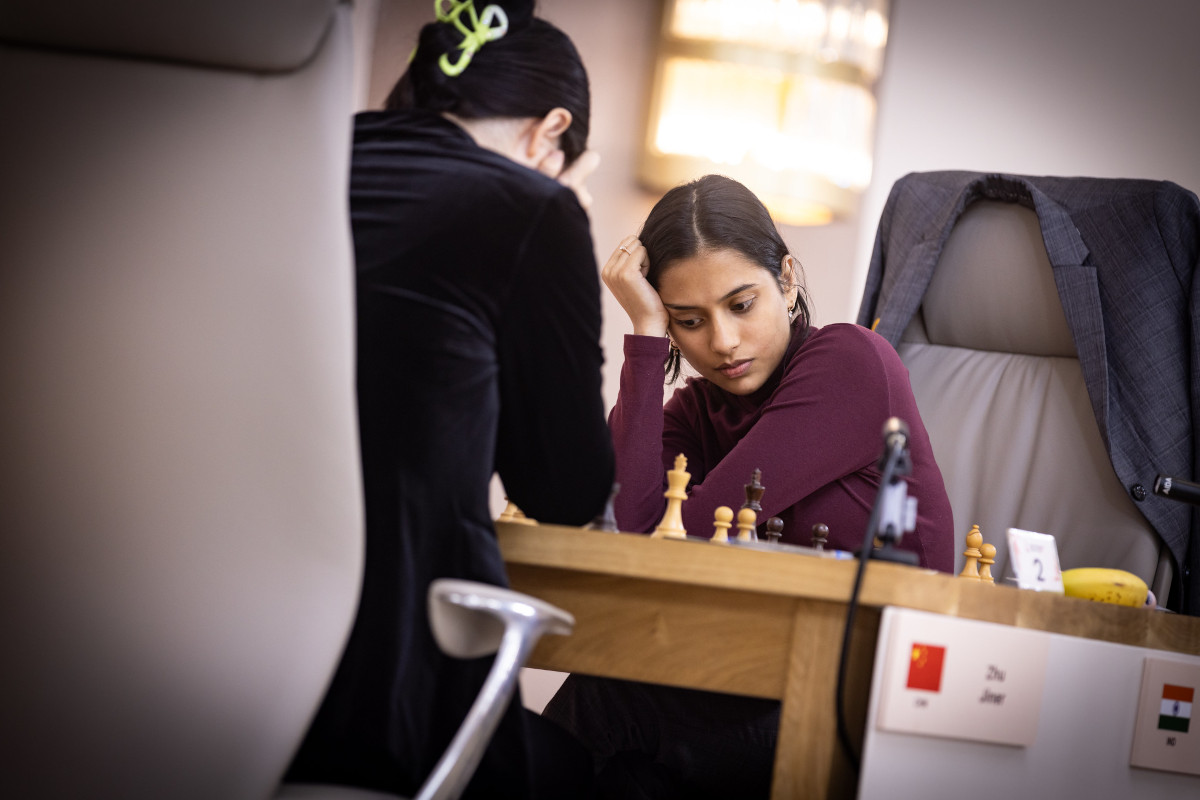
Divya Deshmukh | Photo: Anna Shtourman
Among the four players who secured direct qualification to the quarterfinals, three were from China. Lei Tingjie continued her perfect run, although she was tested by Umida Omonova, who needed a win to equalise. Omonova pushed throughout the game but was ultimately held to a draw by perpetual check after missing a tactical opportunity.
Black's 39...h5 was a serious mistake, but Omonova failed to find the way to make the most of it. The underdog went for the tempting 40.Nf5 gxf5 41.Bxe7 Qg7 42.Qxf5, emerging with an extra pawn and the dark squares weakened around Black's king. As it turned out, however, Lei had little trouble forcing a trade of queens, when her knight was even stronger than White's bishop in the ensuing endgame.
Instead, Omonova could have gone for the much stronger 40.f4, and after 40...Rxb3 she can ignore the threat against her bishop on the queenside and push her pawn further up the board with 41.f5 (diagram below). The position is winning for White.
 The King‘s Indian Attack is a universal opening: easy to learn, flexible, and rich in both tactical and positional opportunities.
All replies fail for Black: 41...Nxf5 is met by 42.Rc8 winning the queen, while 41...Nf4 is met by the good-looking 42.Nc8 Rxa3 43.Nxe7+ Kh7 44.fxg6+ and Black is busted. A huge missed opportunity for the 19-year-old Omonova.
Lei remains unbeaten and has yet to play a single tiebreak in the tournament.
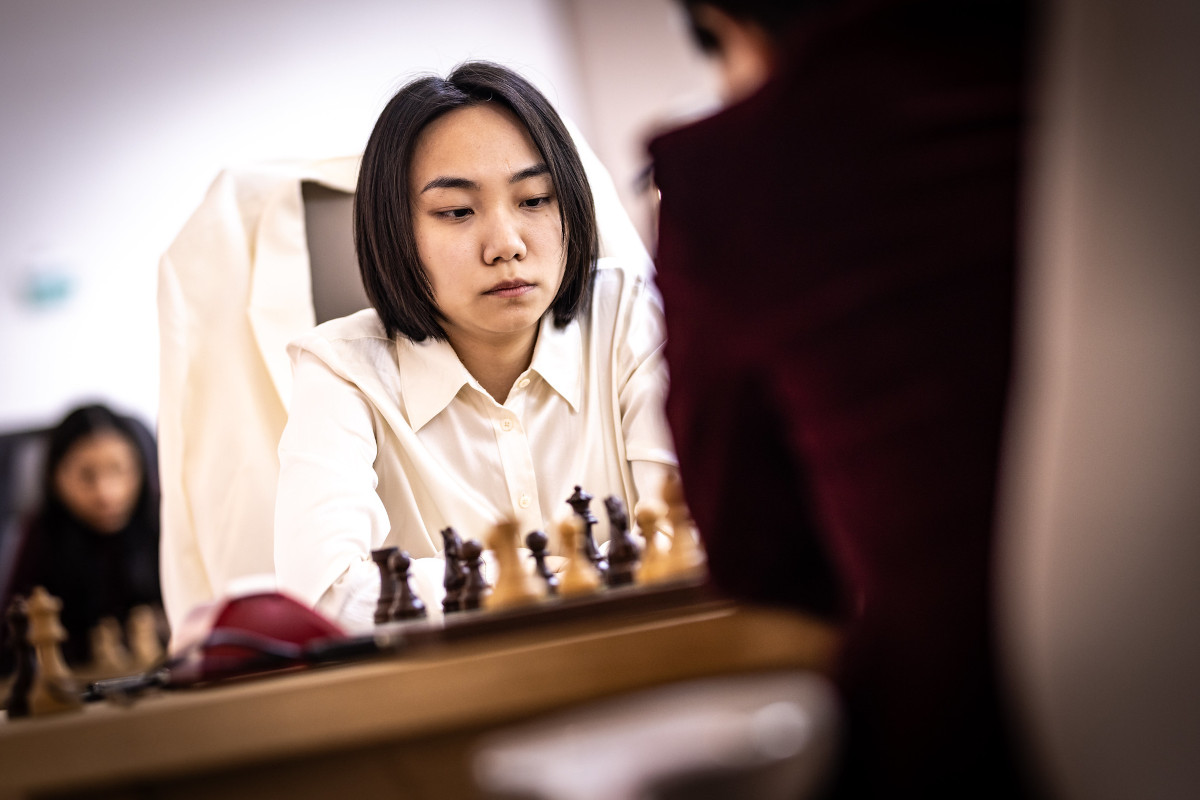
Lei Tingjie | Photo: Anna Shtourman
Tan Zhongyi also drew her second game to clinch qualification, having held a comfortable position throughout against Yuliia Osmak. Despite some early tension when Osmak planted a knight on f7, Tan declined to remove it immediately and calmly steered the game to safety.
Here he best continuation is 14...Rxf7, but Tan went for 14...Qc8. Nonetheless, the Chinese star later captured the knight with the rook and eventually got the draw she needed to knock out her lower-rated opponent.
Meanwhile, 19-year-old Song Yuxin continued her impressive campaign by defeating local player Lela Javakhishvili. Song had already taken the lead in the first game and played solidly to secure the result in the second, becoming the third Chinese player to reach the final eight without needing tiebreaks.
 This video course provides a comprehensive and practical White repertoire in the Ruy Lopez! Through instructive model games and in-depth theoretical explanations, you will learn how to confidently handle both main lines and sidelines.
This video course provides a comprehensive and practical White repertoire in the Ruy Lopez! Through instructive model games and in-depth theoretical explanations, you will learn how to confidently handle both main lines and sidelines.
Free video sample: Introduction
Free video sample: Overview
Free video sample: Chigorin: 9...Na5 10.Bc2 c5 11.d4 Nd7/cxd4
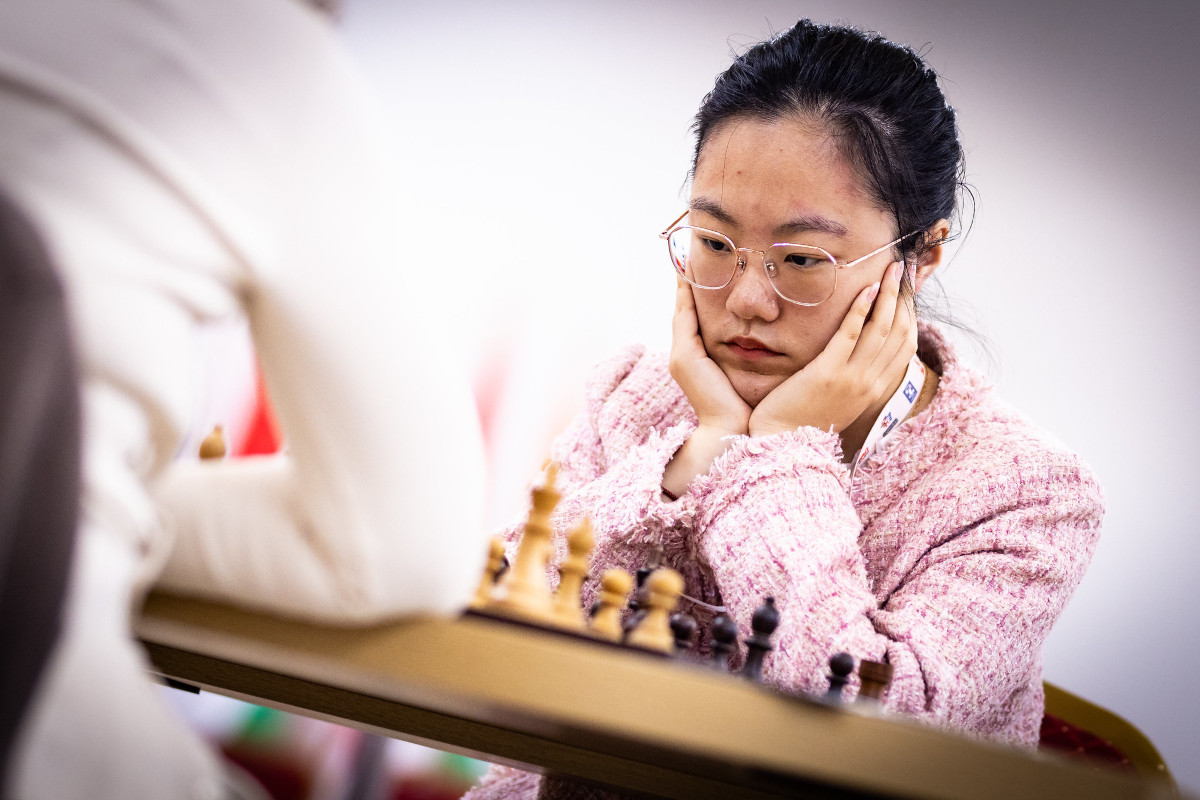
Song Yuxin | Photo: Anna Shtourman
The fourth player to qualify directly was Nana Dzagnidze, who defeated former women's world champion Mariya Muzychuk. After drawing the first game, Dzagnidze adopted a practical and effective strategy. Her Ukrainian opponent gave up a pawn in a theoretical line early on, but later faltered with 11...h6
This move, which is a mistake, had been tried in a recorded game between amateurs (White won that game). After 12.Bxf6 Qxf6 13.e3 Bd6 14.Bb5 0-0 15.Bxd7 Nxd7 16.0-0, Dzagnidze concluded development and consolidated her extra pawn.
Instead, Muzychuk should have tried 11...Na4, also a move seen in the past (tried by Jan Malek, a Polish GM), when Black attempts to justify her early pawn sacrifice by looking for tactical ideas connected to the pin along the c-file.
Dzagnidze converted her material advantage confidently to avoid a tiebreak.
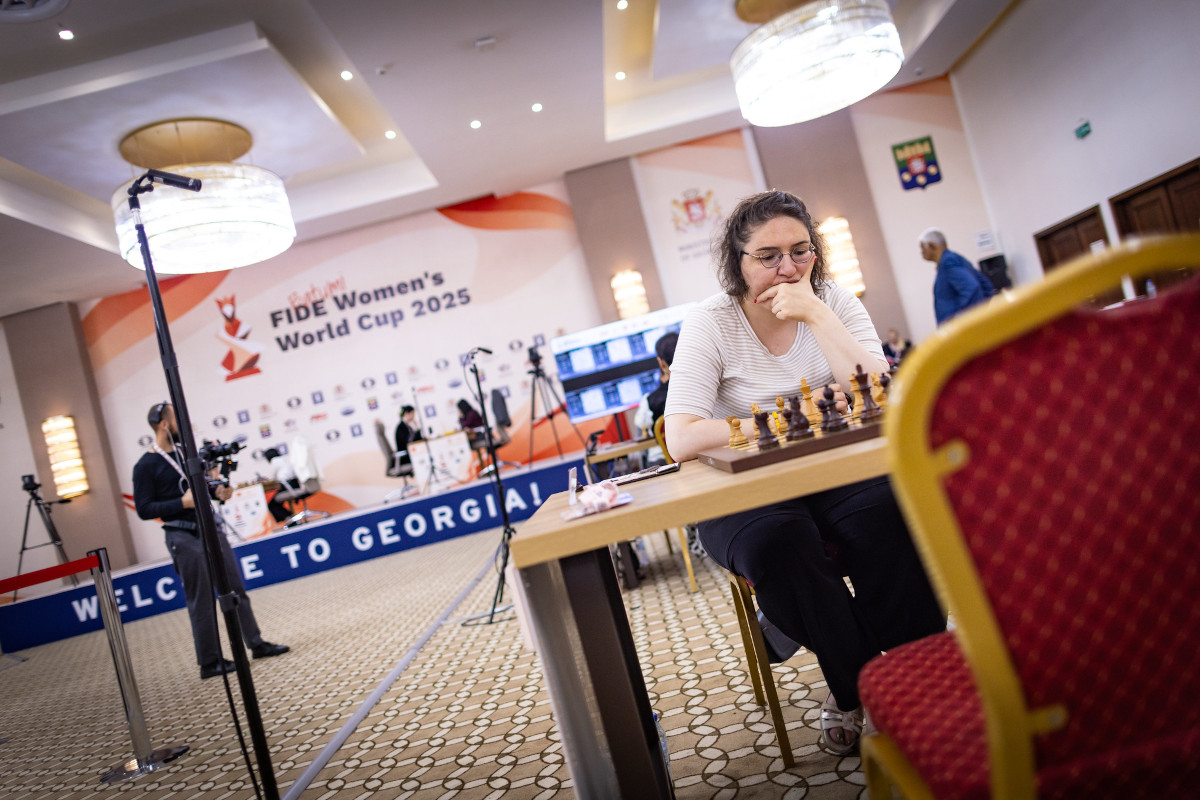
Nana Dzagnidze | Photo: Anna Shtourman
 In this video course, experts (Pelletier, Marin, Müller and Reeh) examine the games of Judit Polgar. Let them show you which openings Polgar chose to play, where her strength in middlegames were, or how she outplayed her opponents in the endgame.
The remaining four matches will be decided in Friday's tiebreaks. All of them feature an Indian player: Humpy Koneru versus Alexandra Kosteniuk, Vaishali Rameshbabu against Meruert Kamalidenova and Harika Dronavalli facing Kateryna Lagno - all of whom drew both their classical games.
The fourth tiebreak match will see Zhu and Divya resume their hard-fought contest, which was the only one featuring two decisive results.
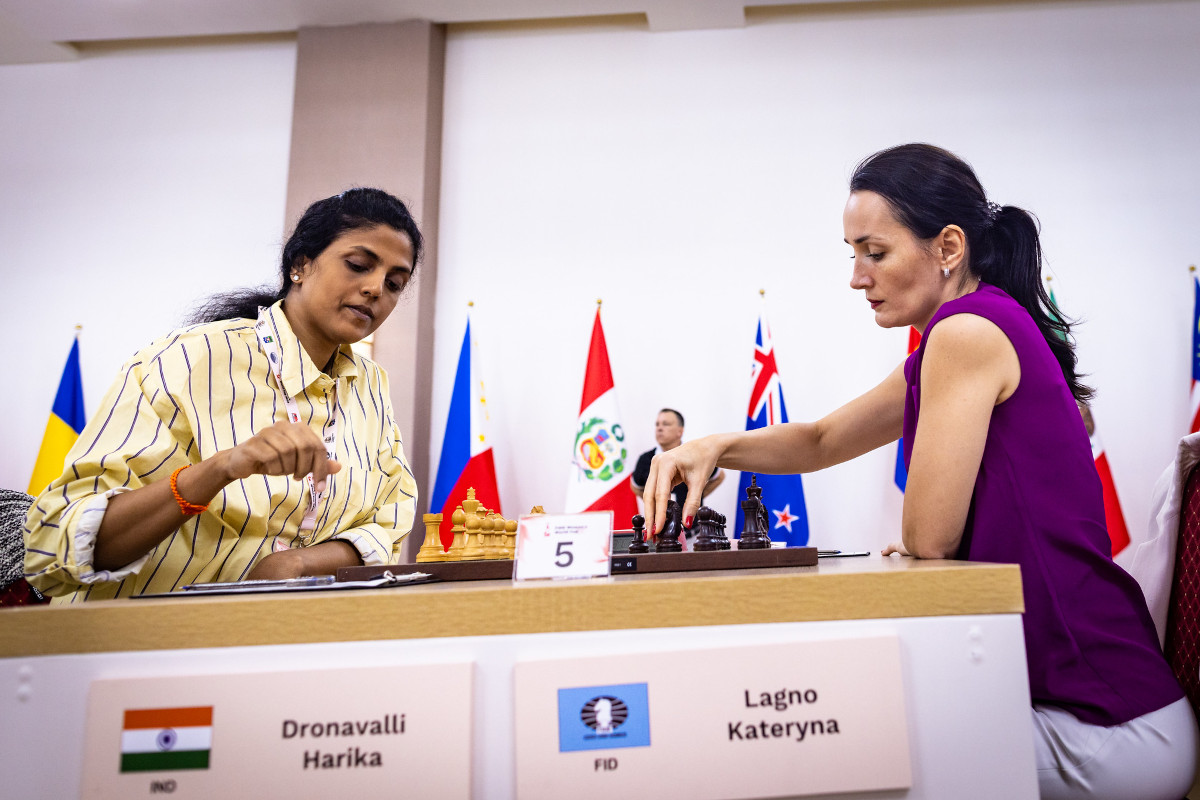
Harika Dronavalli v. Kateryna Lagno | Photo: Anna Shtourman
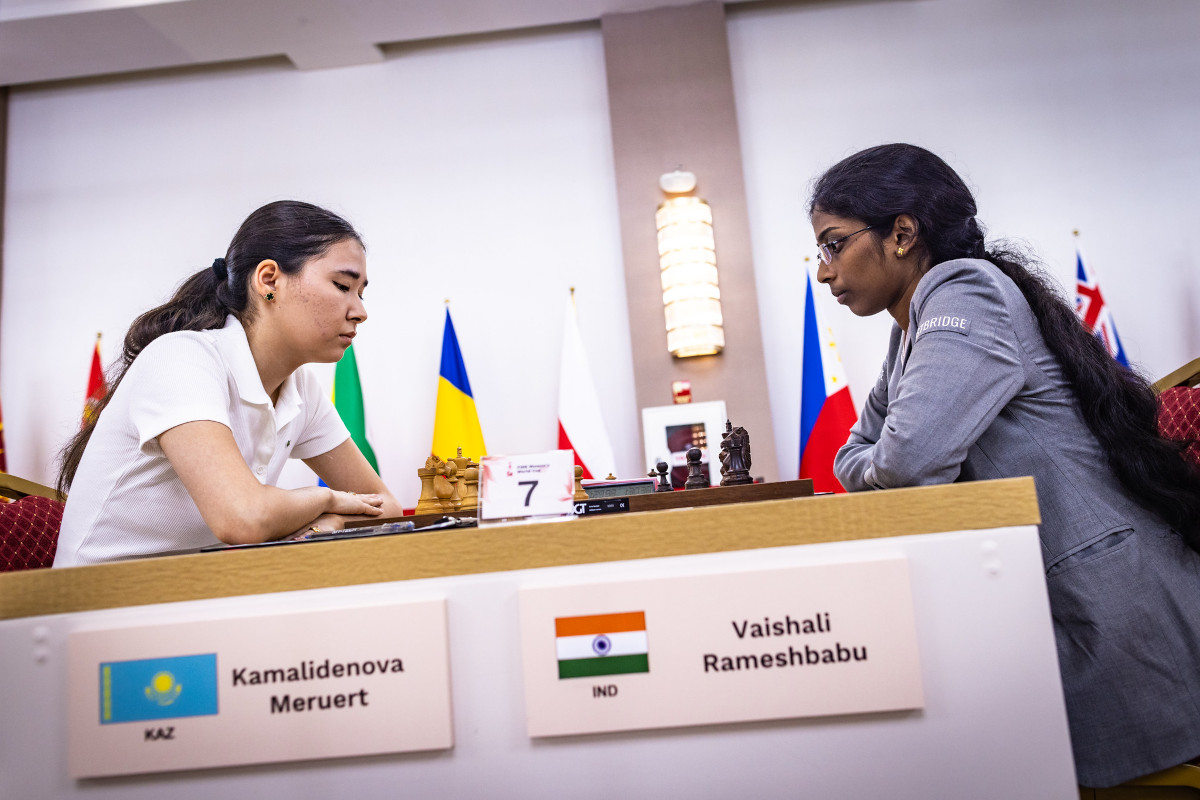
Meruert Kamalidenova v. Vaishali Rameshbabu | Photo: Anna Shtourman
All games
Links


















.jpeg)