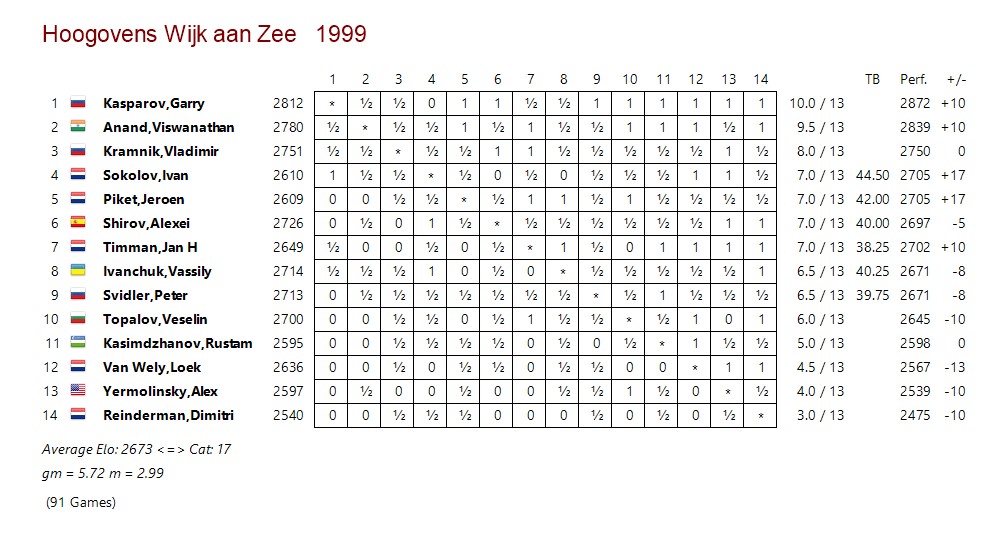
3/11/2021 – Right around the turn of the century, one of the most dominating players in history showed his strength by winning the traditional Wijk aan Zee tournament three years in a row. Not only that — in his first appearance in Wijk, in 1999, Garry Kasparov defeated Veselin Topalov in what is now known as his ‘immortal game’.
Your personal chess trainer. Your toughest opponent. Your strongest ally. FRITZ 20 is more than just a chess engine – it is a training revolution for ambitious players and professionals. Whether you are taking your first steps into the world of serious chess training, or already playing at tournament level, FRITZ 20 will help you train more efficiently, intelligently and individually than ever before.
Winning starts with what you know The new version 18 offers completely new possibilities for chess training and analysis: playing style analysis, search for strategic themes, access to 6 billion Lichess games, player preparation by matching Lichess games, download Chess.com games with built-in API, built-in cloud engine and much more.
Tata Steel 2025 with game analyses by Praggnanandhaa, Abdusattorov, Giri and many others. Opening videos by Ganguly, Blohberger and King. 10 opening articles with new ideas for your repertoire. Special on Korttschnoj and much more!
€21.90
Three out of three
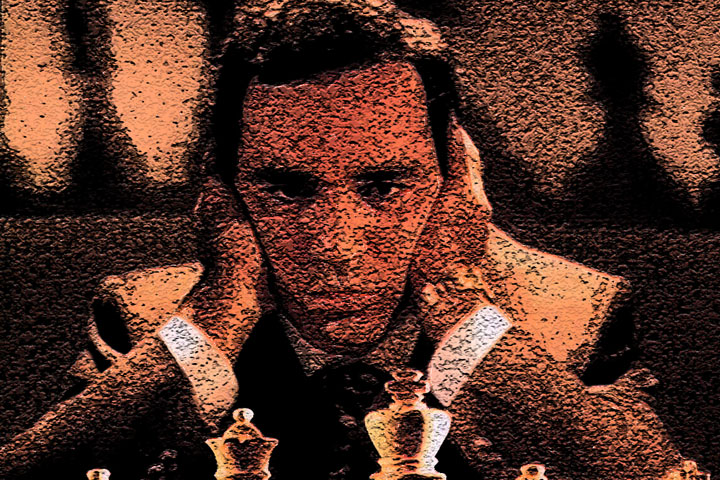
Garry Kasparov reigned as world chess champion from 1985 until 2000, five years before his early retirement in 2005. Despite having lost the world title against Vladimir Kramnik, however, he continued to win elite tournaments until the day he quit competitive chess. His two-decade dominance was an impressive showing of talent, determination and intense preparation.
The man from Baku, now devoted to politics and writing, achieved his highest-ever live rating in March 2000, shortly after getting his second straight victory at the traditional tournament in Wijk aan Zee. In fact, the former world champion only played three times in Wijk, and he won the event every single time he participated — from 1999 to 2001.
Kasparov’s record in Wijk is jaw-dropping — he scored 19 wins, 19 draws and lost only once during his three appearances. The only player to defeat him at the small coastal Dutch town was Ivan Sokolov, who obtained a memorable attacking win from the white side of a Nimzo-Indian Defence in round 9 of the 1999 edition.
The 1999 edition was memorable for a number of reasons. It was the last time the event ran under the name “Hoogovens Tournament”, which had been used since 1968; it was Kasparov’s first-ever participation; and Kasparov won with the highest-ever score achieved when the tournament was played as a 14-player round robin (the same 10/13 score was achieved by Browne and Seirawan in 1980, by Korchnoi and Beliavsky in 1984 and by Carlsen in 2013).
Not only that. At least three players have fond memories of the event’s penultimate edition of the 20th century — Sokolov, for his victory over Kasparov; Alex Yermolinksy, who wrote a piece about his memorable win over Veselin Topalov amid a not-so-great overall performance; and Kasparov, who got to play what is now known as his ‘immortal game’.
These DVDs are about Understanding Middlegame Strategies. In the first DVD dynamic decisions involving pawns are discussed. The second DVD deals with decision making process concerning practical play.
The game
Kasparov arrived in Wijk after not having played a single classical tournament in over ten months. He had played for the last time in Linares 1998, which ran from February 22 until March 8 — the Hoogovens Tournament kicked off on January 16, 1999.
In Linares, a 7-player double round robin, Kasparov had won one game and drawn the rest. Vishy Anand, rated 2770 at the time (55 points behind Kasparov’s 2825), had won the tournament with an impressive 7½/12. Moreover, the Indian star had a good year and closed the rating gap to 31 points going into the tournament in Wijk. Some pundits even considered Anand to be the favourite.
This DVD allows you to learn from the example of one of the best players in the history of chess and from the explanations of the authors how to successfully organise your games strategically, and how to keep your opponent permanently under pressure.
Vishy Anand facing Anatoly Karpov in the final of the 1998 FIDE World Championship knockout tournament — Karpov won 5:3
Anand and Kasparov were sharing the lead with 2½ points each after three rounds. It was in round 4 that the Russian defeated Topalov in splendid fashion. (In the end, Kasparov would win the tournament merely a half point ahead of his Indian colleague.)
Out of a Pirc Defence, both Kasparov and Topalov castled queenside. In a tense position, Topalov advanced in the centre:
After 19...d5, Kasparov could have exchanged everything on d5, getting a quieter but still fighting position. The world champion, however, went for 20.Qf4+ Ka7 21.Rhe1 d4.
When the Russian chose not to go for exchanges in the centre, he had most likely already decided to play the trying 22.Nd5 instead of 22.Na2 or 22.Ne2. The game continued 22...Nbxd5 23.exd5 Qd6.
And then came the shocking two-move sequence that would be celebrated by commentators for years to come:
Garry Kasparov's rise to the top was meteoric and at his very first attempt he managed to become World Champion, the youngest of all time. In over six hours of video, he gives a first hand account of crucial events from recent chess history, you can improve your chess understanding and enjoy explanations and comments from a unique and outstanding personality on and off the chess board.
Kasparov unleashed 24.Rxd4, and Topalov bravely took the bait with 24...cxd4 — surely the Bulgarian considered the safer 24...Kb6, which is the best move according to the engines, but he is not one to shy away from a tactical skirmish.
And then...
25.Re7, when the rook cannot be captured due to 25...Qxe7 26.Qxd4+ Kb8 27.Qb6+ Bb7 28.Nc6+ Ka8 29.Qa7#.
From this point on, Topalov found the most challenging continuations at every turn, with Kasparov stubbornly keeping up his attack with carefully calculated manoeuvres. For example, on move 36:
Apparently, the black king has found safety on d1 — of all squares. But here Kasparov found the only winning move, 36.Bf1. Black cannot take the bishop due to mate after 36...Qxf1 37.Qc2+ Ke1 38.Re7+, while after Topalov’s 36...Rd2 the world champion found the killer 37.Rd7, pinning the rook!
37...Rxd7 38.Bxc4 bxc4 39.Qxh8 and resignation came five moves later.
It takes two players to create such a masterpiece, so Topalov deserves a lot of credit for his brave performance against the best in the world.
You can replay the game with expert analysis by GM Igor Štohl and/or watch the video uploaded by GM Daniel King to his popular Power Play Chess YouTube channel:
Carlos Alberto ColodroCarlos Colodro is a Hispanic Philologist from Bolivia. He works as a freelance translator and writer since 2012. A lot of his work is done in chess-related texts, as the game is one of his biggest interests, along with literature and music.
Whether you‘re a beginner looking for a clear roadmap or an advanced player ready to refine your strategic edge, this comprehensive course will transform the way you think about chess.
Biel Chess Festival 2025 with analyses by Aravindh, Navara, Wojtaszek et al. Opening videos by Blohberger, Engel and Sokolov. Training columns ‘The fortress’, ‘Opening traps , ‘Fundamental Endgame Knowledge’ and much more
If you are looking for a practical, easy-to-learn system to sidestep the main lines and catch your opponent off guard, the Two Knights Variation is your perfect weapon against the French!
In this 60-minute course, IM Andrew Martin introduces you to a flexible and refreshingly simple opening setup - that Grandmaster Hikaru Nakamura has used to rack up numerous impressive wins.
ChessBase is re-releasing this timeless classic in the modern ChessBase Media format - complete with brand-new training features. Get ready to rediscover a masterpiece of chess instruction!
We use cookies and comparable technologies to provide certain functions, to improve the user experience and to offer interest-oriented content. Depending on their intended use, analysis cookies and marketing cookies may be used in addition to technically required cookies. Here you can make detailed settings or revoke your consent (if necessary partially) with effect for the future. Further information can be found in our data protection declaration.
Pop-up for detailed settings
We use cookies and comparable technologies to provide certain functions, to improve the user experience and to offer interest-oriented content. Depending on their intended use, cookies may be used in addition to technically required cookies, analysis cookies and marketing cookies. You can decide which cookies to use by selecting the appropriate options below. Please note that your selection may affect the functionality of the service. Further information can be found in our privacy policy.
Technically required cookies
Technically required cookies: so that you can navigate and use the basic functions and store preferences.
Analysis Cookies
To help us determine how visitors interact with our website to improve the user experience.
Marketing-Cookies
To help us offer and evaluate relevant content and interesting and appropriate advertisement.










 Garry Kasparov reigned as world chess champion from 1985 until 2000, five years before his early