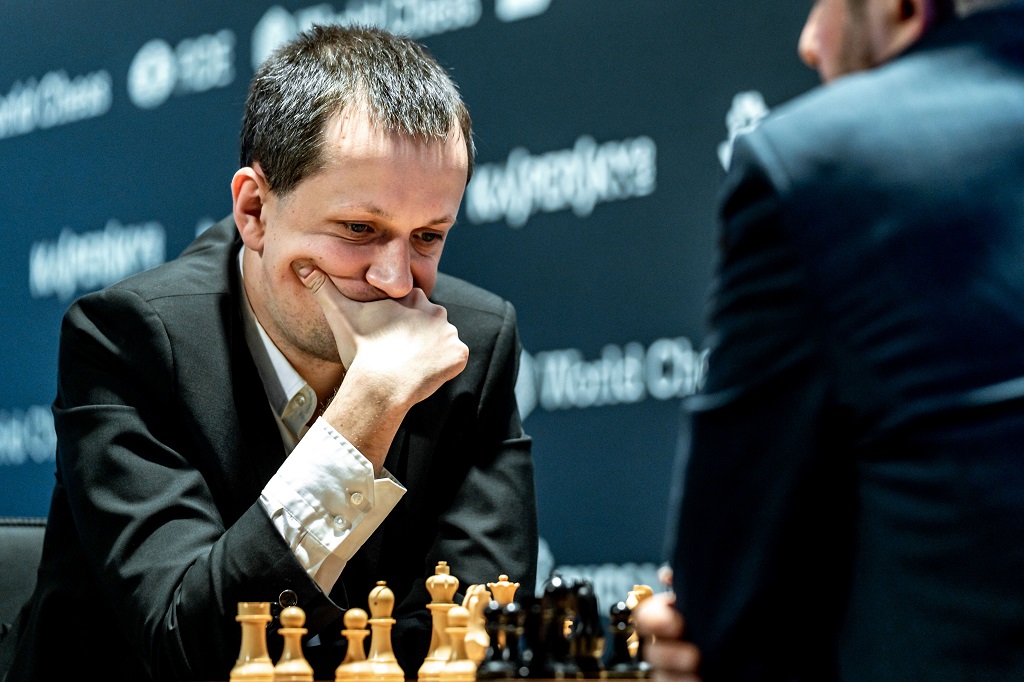

Not only is Radoslaw Wojtaszek the first player in the semi-finals, but also he is the first one to gather two extra points in the overall Grand Prix standings after winning both his matches in Moscow without needing tie-breaks. His good results so far have helped him recover the first spot among Polish players on the live ratings list. The player from Elblag has gained twelve rating points in Moscow, after eliminating two players higher-rated than him.
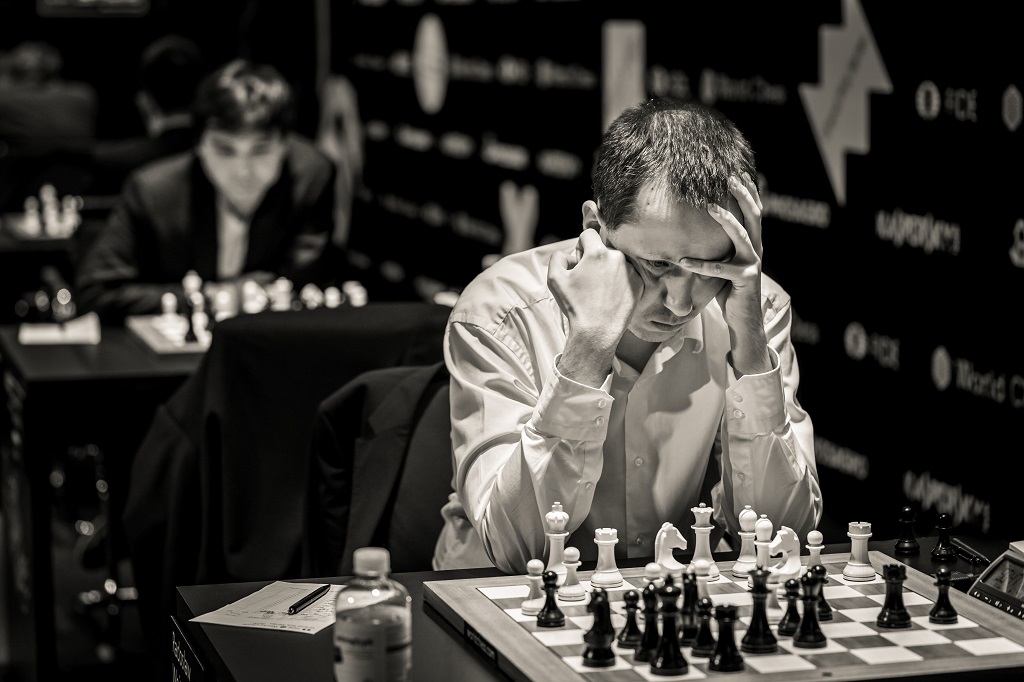
Svidler went all out with Black, Wojtaszek ended up on top | Photo: Niki Riga / World Chess
In their return game on Tuesday, the Bundesliga teammates (both play for champions Baden-Baden) pulled out all the stops, with Peter Svidler apparently not in the mood to look for a draw with the black pieces. According to the eight-time Russian champion, the one big mistake that turned the evaluation in White's favour was the check he gave on move 27:
Svidler played 27...♝d4+ and left his bishop on a vulnerable square prior to a series of complex tactical shots in the centre. The computers actually think this check was not the culprit of Black's defeat, however — according to the silicon machines, the error came after 28.♔h2:
Black here opted for 28...♞7f6 instead of the suggested 28...♜b6, which would have left Black with a defensible — albeit not as double-edged — position. After the text, a tactical scramble ensued, in which Peter first decided to sacrifice an exchange and then gave up his queen. Wojtaszek handled the complications effectively and went on to get the pass to the semi-finals after 42 moves.
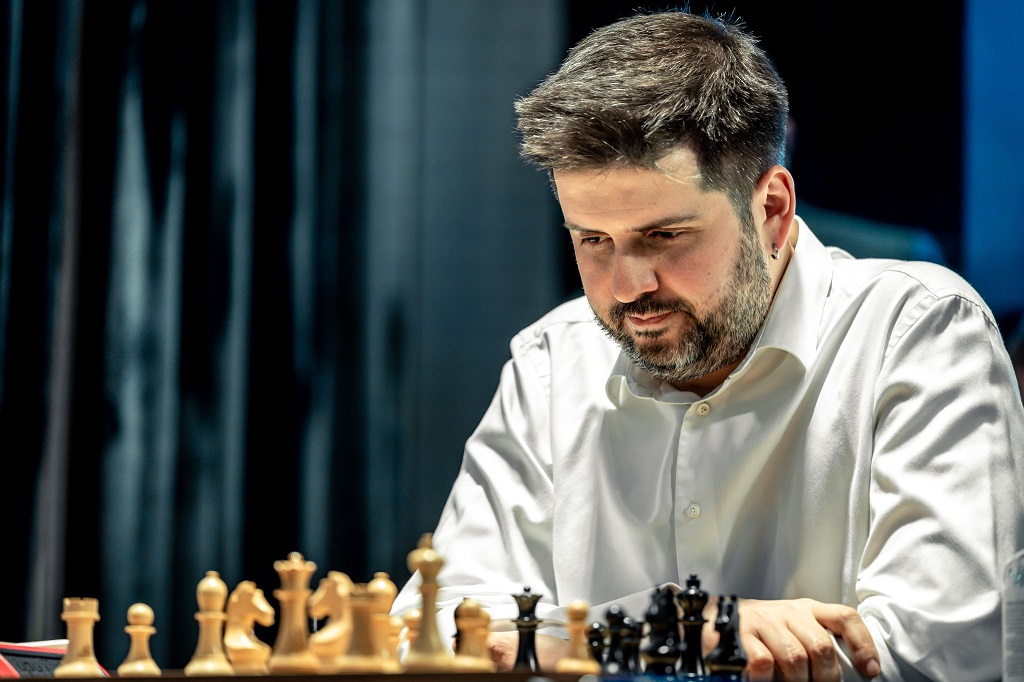
Svidler is a knock-out specialist | Photo: Niki Riga / World Chess
In the post-game interview, Svidler showed no regrets about his decision to play a sharp line with Black:
I'm obviously not happy about today. I thought my approach was correct. I mean, I play about every move possible after 3.f3, and I went for the line which is sort of the sharpest and the least clear of all the things I could have done, but I think Radek just played better than I [did] today...and, I mean, I still think that the choice was correct, but I don't have very much experience in these types of structures and eventually this is what decided the game.
For a second day in a row, in the final position of the game that faced Wesley So and Alexander Grischuk the American was a pawn to the good, except this time Grischuk was the one on the bad side of the draw — the Russian was in real danger of losing around move 45. The players explored a line of the now widespread Sveshnikov variation of the Sicilian; White got an extra pawn (albeit a doubled one on the e-file); and, after a scare, Black managed to save the draw in 68 moves.
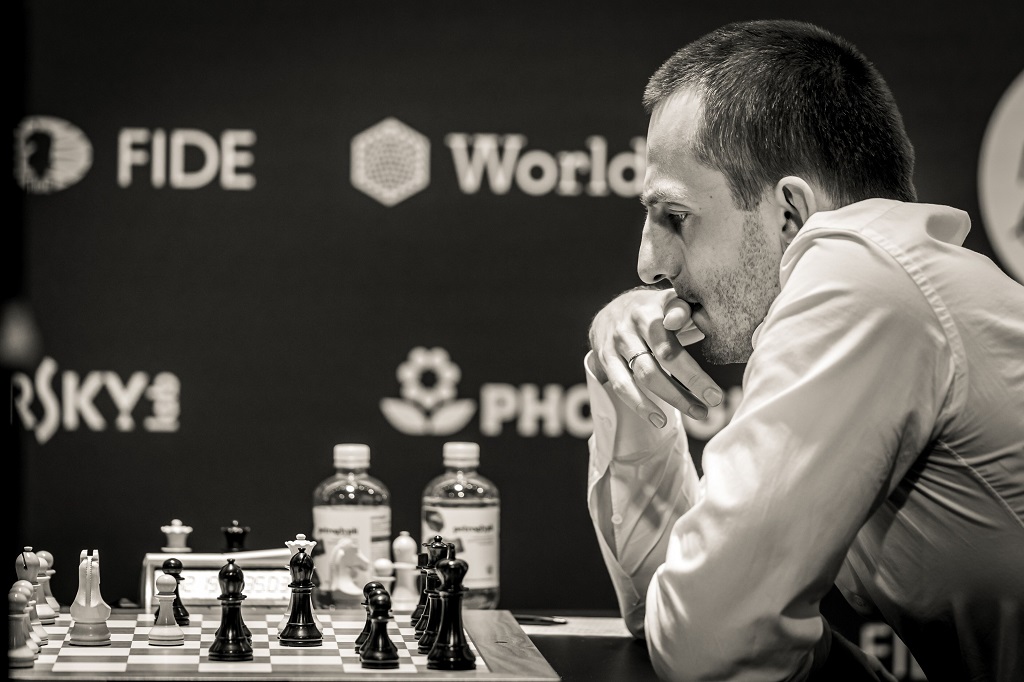
Three-time World Blitz Champion Alexander Grischuk | Photo: Niki Riga / World Chess
Grischuk was vehement when he referred to his performance in the endgame:
It almost became the most humiliating, embarrassing, disgraceful loss of my career, if I had lost this endgame, and I came close at some point.
Wesley agreed that his opponent could have made an easy draw at some point. The American also confessed that he was happy the draw was not forced immediately, as he wanted to stay in the playing hall to follow Radek Wojtaszek's game...
A rather disappointed Ian Nepomniachtchi spoke to Eteri Kublashvili after his draw with Wei Yi. Russia's highest-rated player was on top after the opening, but when things started to look increasingly dangerous for Black, Wei Yi sacrificed a pawn and then exchanged into an equal queen endgame to take the mini-match to tie-breaks. The players reached the queen endgame with 3 v 2 pawns on the kingside on move 39, and 'Nepo' kept trying to make something out of the theoretically drawn position during thirty moves, but to no avail.
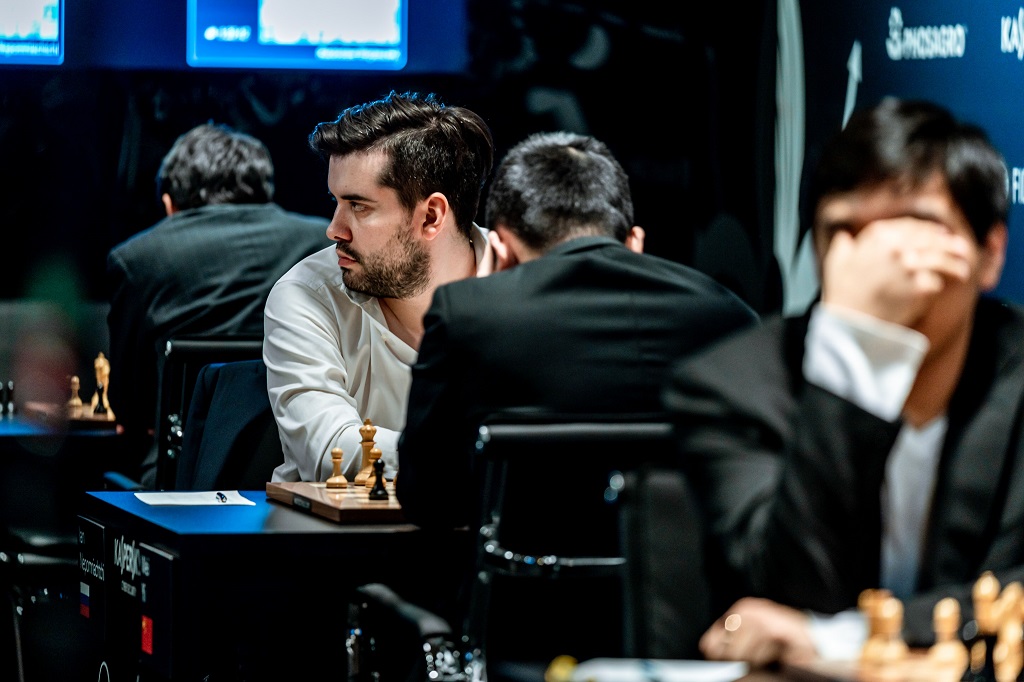
Nepo was the one in the driver's seat | Photo: Niki Riga / World Chess
Unlike in the World Cup, the organizers of the Grand Prix decided that the drawing of colours for the tie-breaks will take place right before the games. When asked about this change, the players generally agreed that it does not make much of a difference, with Nepomniachtchi stating:
We used to know the colour, but in general I think the rules are the same — you play one game with White, one game with Black, so I don't think it really matters.
Perhaps the idea is to avoid the player who gets Black first to prepare an ultra-solid defence for the first game, in order to secure a draw and then play stress-free with White. We will just have to wait and see how the players handle this situation on Wednesday.
Once again, Daniil Dubov showed good preparation to get the upper hand in the opening against a first-rate player. Hikaru Nakamura, however, kept things under control until signing a 32-move draw. According to Daniil, it was "the exact scenario [he] wanted to have" — risk-free, with the possibility of putting pressure on his opponent. He thought that in order to get something out of his advantageous position, he probably needed to show something extremely concrete, "almost a puzzle". So, given the fact that Hikaru defended well, the result was perceived as fair by both contenders.
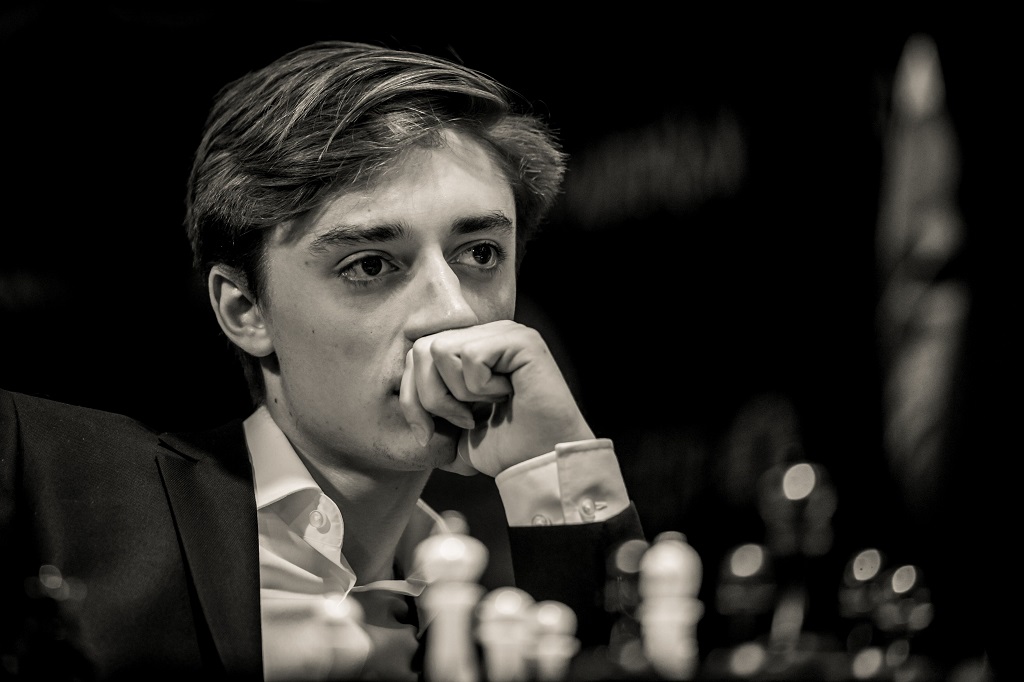
Dubov has shown great preparation in Moscow | Photo: Niki Riga / World Chess
A curious exchange took place during the post-game interview, when Eteri Kublshvili asked a question without clearly stating who was supposed to answer:
Eteri Kublashvili: You are going to play on tie-breaks against one of the strongest speed chess players in the world, so what are your expectations from this match?
Daniil Dubov: Who are you talking to? (laughs).
Hikaru Nakamura: Yeah, exactly (smiles). I mean, Daniil won the Rapid [World Championship], let's be fair. So it comes down to a couple of moves probably in either rapid or blitz, and [that's what] makes a difference. If you look at this match against Teimour I had, I was supposed to be this big favourite, but it was only because he made a blunder when he was low on time that I won in this rapid game, so, I mean, anything can happen of course.
Commentary by GMs Evgeny Miroshnichenko and Daniil Yuffa